Intro to HTML Semantic HTML
Learning objective: By the end of this lesson, learners will be able to apply semantic HTML tags to enhance the structure, accessibility, and SEO of a webpage.
Semantic HTML
Semantic HTML helps express the meaning or purpose of the content in a webpage:
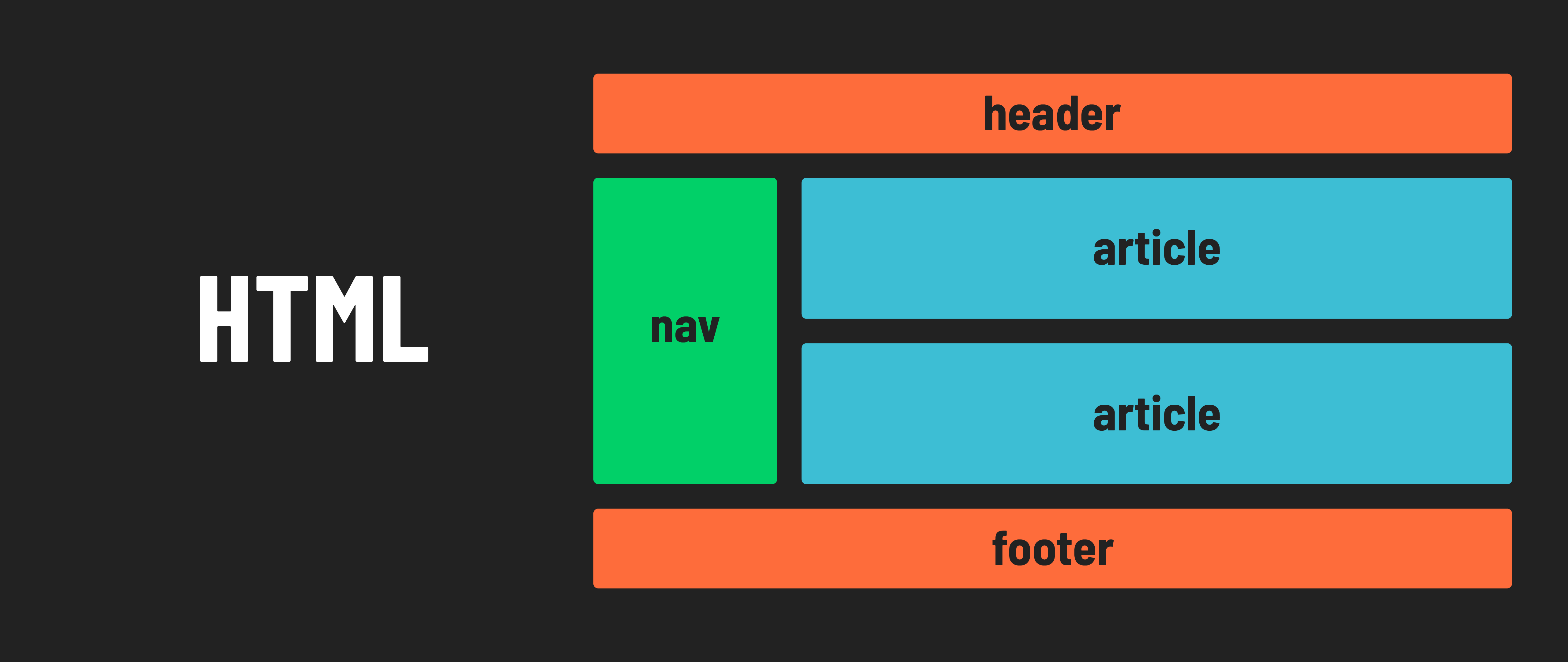
Semantic HTML clarifies the developer’s intentions about what they are trying to accomplish when structuring a page. It also improves accessibility for the visually impaired enabling screen readers to do their job better.
It also allows for more accurate web searches via better SEO (search engine optimization).
📚 The goals of search engine optimization are to increase the quantity and quality of traffic to a website through search engine results. It involves making changes (including using semantic HTML) to a website to make it more attractive to search engines.
🎓 You Do
Take some time to research these semantic HTML tags. Research how these tags differ from the non-descriptive <div> element.
<section><article><aside><figure><main><footer><header><nav>