Intro to Express Concepts
Learning Objective: By the end of this lesson, students will understand the basics of the Express framework, its applications, and the core functionalities of web application frameworks.
Introduction to the Express framework
Express, the most widely used web application framework for Node.js, stands out for its flexibility and minimalistic approach. This popular framework simplifies the process of building robust server-side applications and APIs with Node.js.

Why choose Express?
- Simplicity and Control: Express’s minimalistic nature means less initial overhead for developers, offering more control over the architecture and features of their applications.
- Versatility: It’s well-suited for a range of applications, including:
- Web Applications: Serving dynamic HTML content.
- Web Servers: Handling static and dynamic requests efficiently.
- APIs: Creating endpoints for client-server communication.
In this module, we’ll focus primarily on developing web applications using Express.
Core functionalities of web application frameworks
Express exemplifies the key features of web application frameworks, which are essential for building efficient server-side solutions:
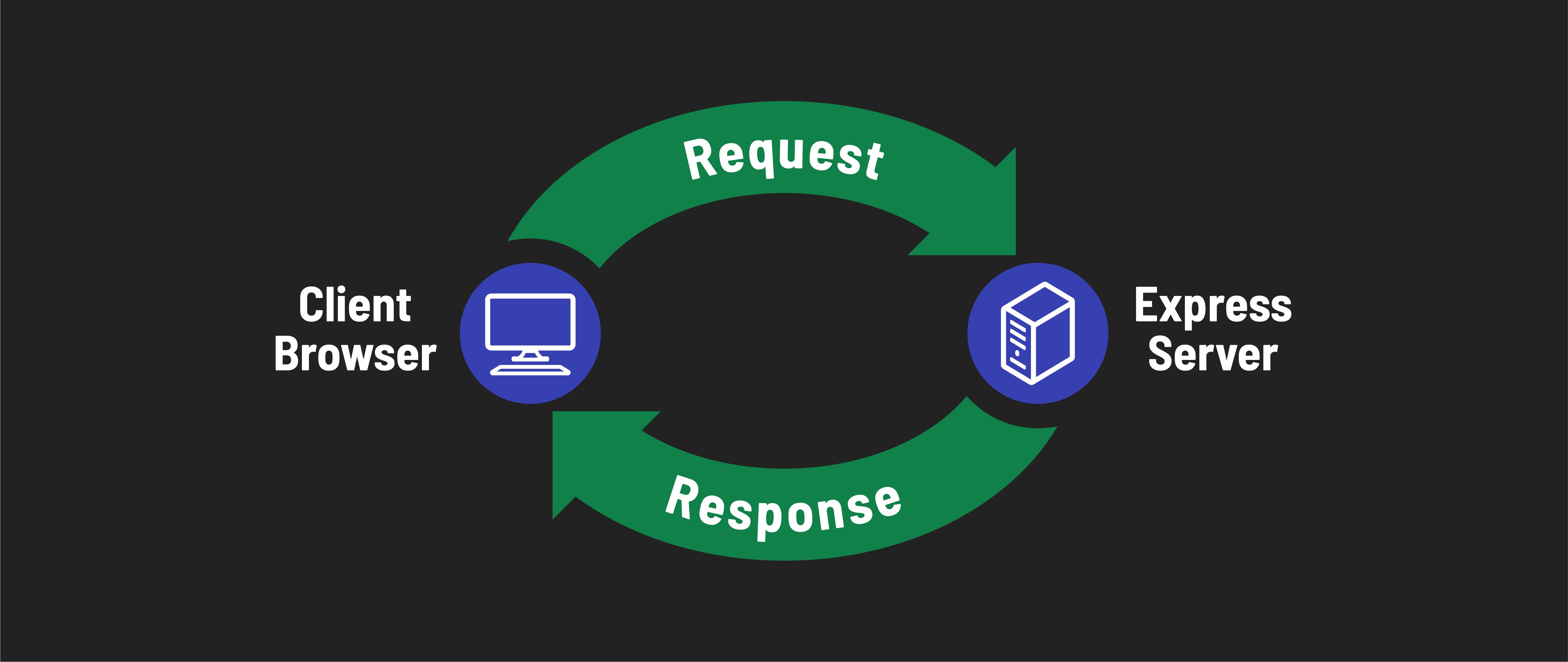
- Routing: Defining routes (URLs) that client applications can request, crucial for organizing different parts of your application.
- Request Handling: Processing incoming requests, parsing data, and making decisions based on the route and HTTP method.
- Response Generation: Combining data with templates to create dynamic content, or directly sending data as a response to client requests.
Understanding these core concepts is vital for developing web applications that are responsive, dynamic, and user-friendly.