HTTP Request Response Cycle Concepts
Learning objective: By the end of this lesson, students will be able to explain the concept of HTTP (Hypertext Transfer Protocol).
What are HTTP and the HTTP request-response cycle?
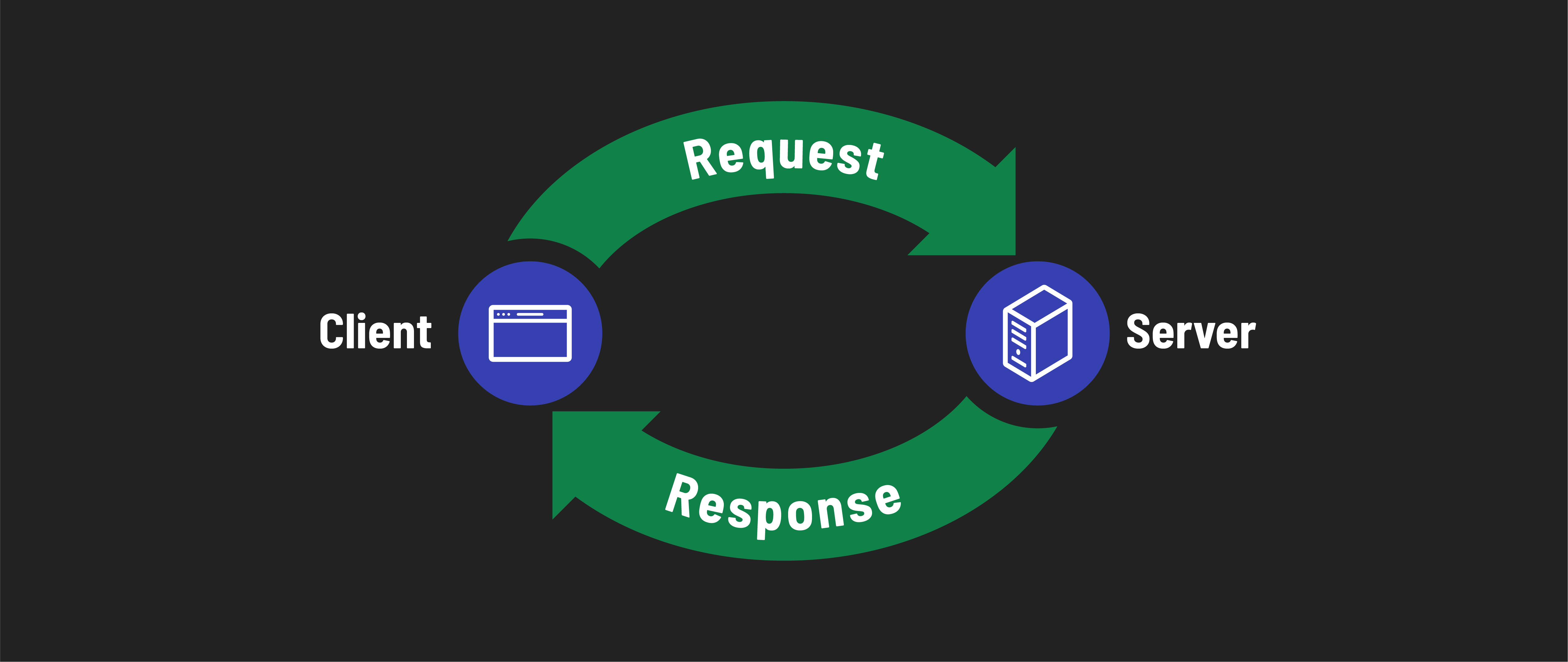
HTTP (Hypertext Transfer Protocol) is a set of rules that applications follow when communicating with each other over the internet. These rules help to ensure client and server applications can reliably communicate with one another.
The HTTP request-response cycle refers to the process where a client sends an HTTP request, and the server subsequently issues an HTTP response to that request.
Imagine visiting a restaurant. When you enter and sit down, you are presented with a menu. The waitperson then asks for your order, giving you time to choose. After you make a selection, they relay the order to the kitchen, which receives your order. The kitchen prepares your meal. When it is ready, it is brought and presented to you.
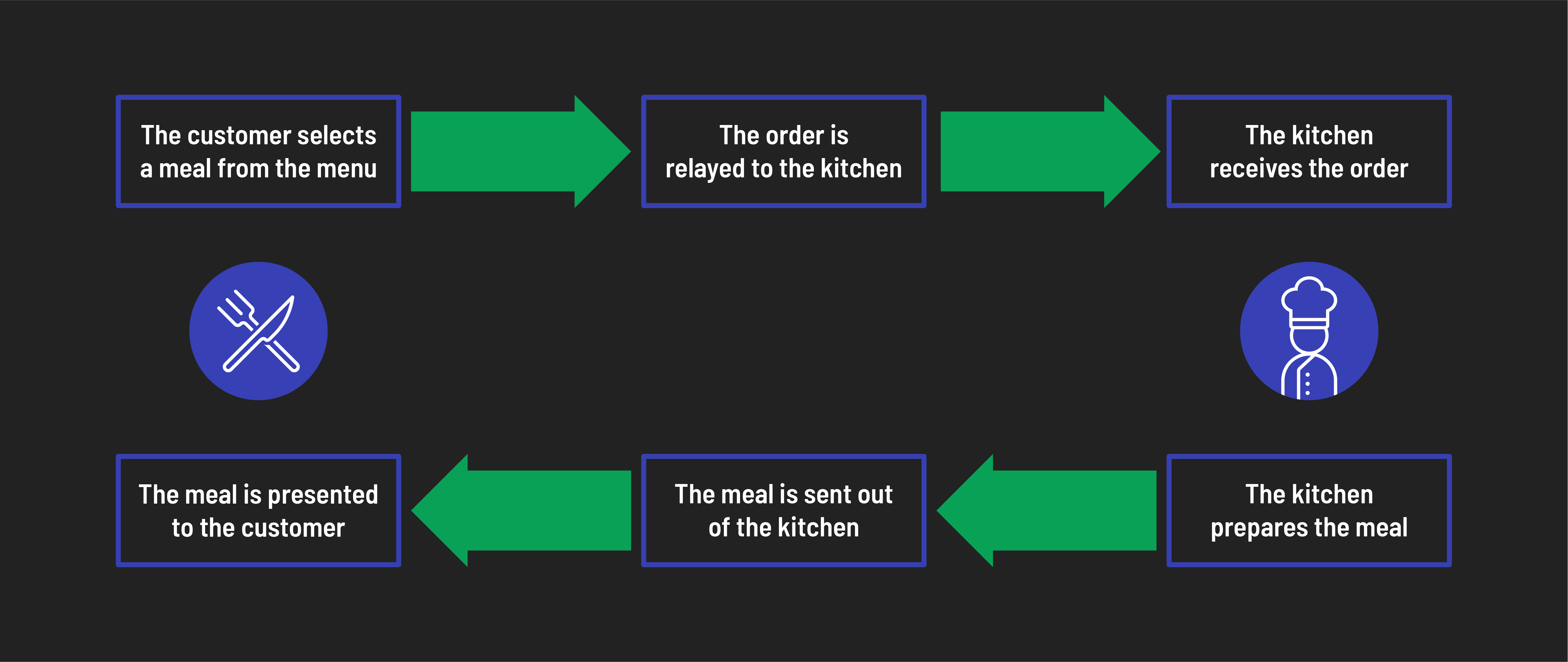
This sequence is a protocol - a set of established rules for dining in a restaurant. If you tried to order directly from the chef or were brought random dishes without requesting them, the system would become confusing and chaotic.
Similarly, applications use the HTTP protocol to request and receive services provided by servers over the internet. This protocol ensures a smooth and orderly transfer of data, just like the rules in a restaurant guide the ordering process and reliable delivery of your meal.
In a traditional web app, when you visit a website, you can browse and then take an action (such as clicking on a link). Using the HTTP protocol, your browser relays this request to a web server, which prepares and responds with a new HTML page. When your browser receives it, it is rendered in the browser window for you to see and interact with. The cycle can repeat - it is carried out on every request you make in the browser.
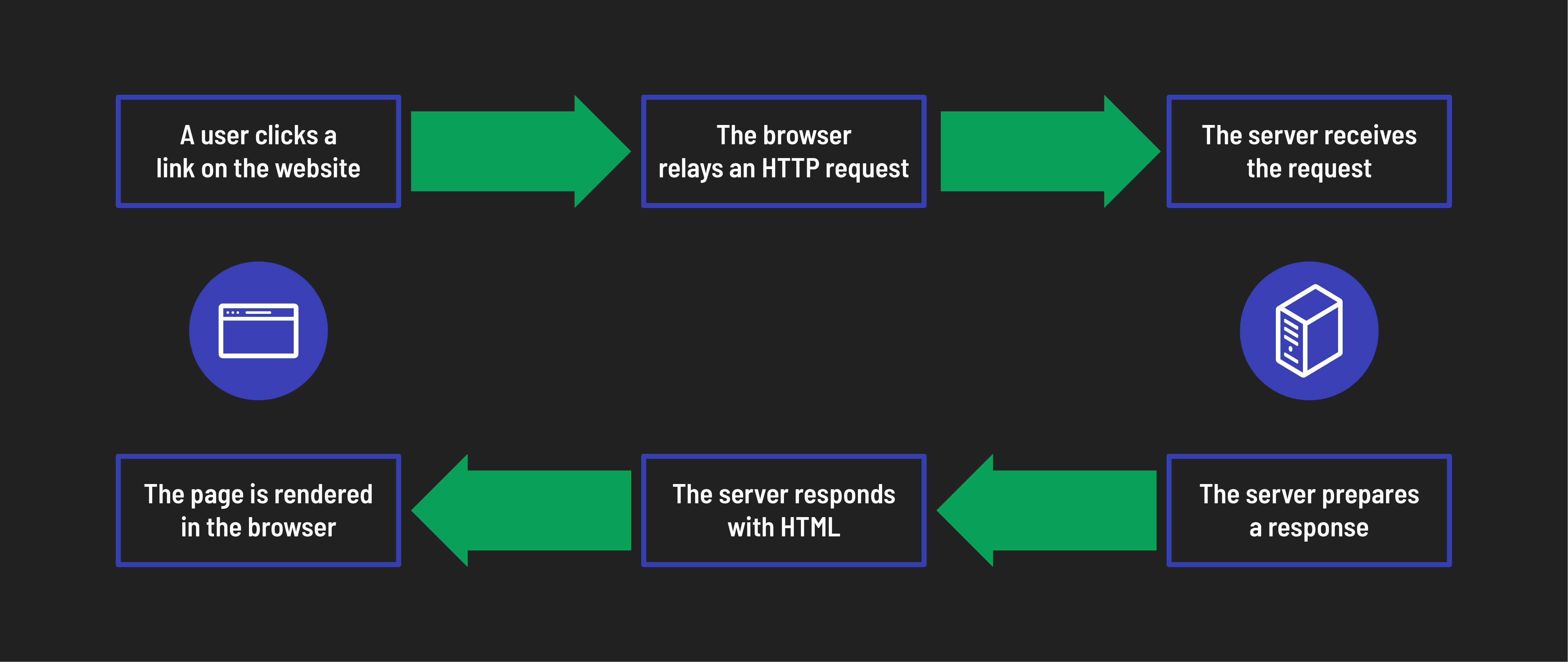
To draw a parallel with our restaurant analogy, consider your interactions with the restaurant’s waitstaff as the protocol allowing you (the client) to interact with the kitchen (the server), which is there to prepare food in response to your orders or requests. Just as the waitstaff in the restaurant prepares your order request for the kitchen and brings you the resulting prepared meal, the browser prepares your HTTP request and shows you the results of that request.
This process is like a conversation. You ask (make a request), and then you get an answer (the response). Each cycle is a complete exchange, and a new one starts for every new action you take.
📚 A request is a message a client sends to a server asking for specific resources or services. A response is the message a server sends back to the client as a reply to a request.